
Field note / No. 001
Red Fox
Meet the bright-eyed explorer with black socks, a bushy tail, and a talent for making itself at home.
Vulpes vulpes
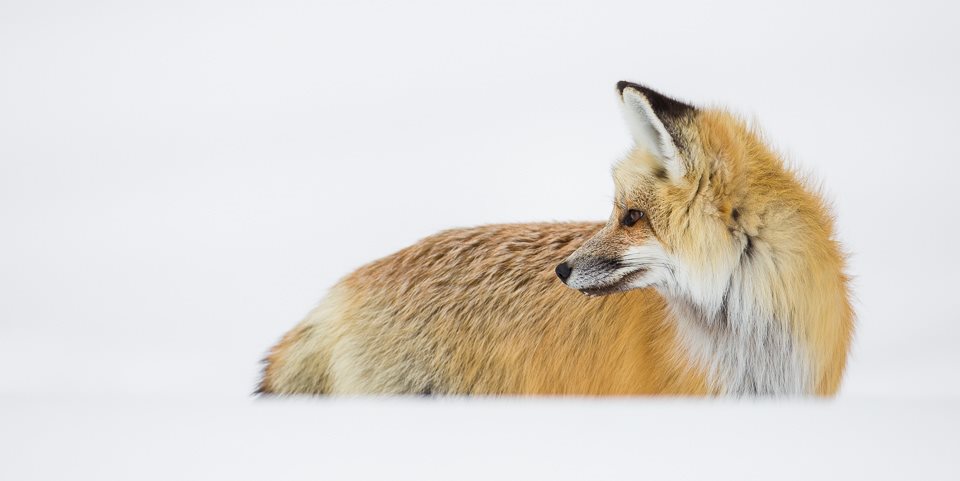
The pocket field guide
- Family
- Canidae (the dog family)
- Food
- Both animals and plants
- Often active
- Around dusk and at night
- Baby fox
- A kit (also called a cub or pup)
If you could design an animal for a secret woodland adventure, it might look a lot like a red fox. Pointed ears help it listen, a narrow muzzle helps it investigate, and a magnificent tail follows along behind.
But this fox is not just a woodland animal. It can live near farms, in grasslands, in mountains, and even in towns. Its secret is being adaptable: able to make use of different places and different foods.
How do you recognize a red fox?
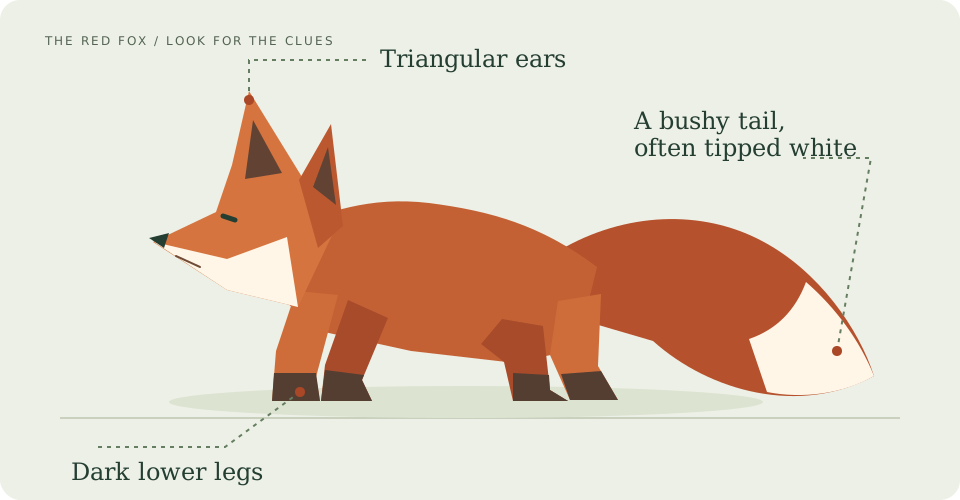
Look for a slender face, tall triangular ears, dark lower legs, and a long, bushy tail that often has a white tip. Many red foxes wear rusty orange-red fur with a pale chest, as if they have pulled on a fluffy scarf.
Those markings are clues, not a uniform! Some red foxes have much darker coats. A silver fox is a color form of the red fox, not a separate species. Another color form, called a cross fox, has dark markings across its back and shoulders.
Where do red foxes live?
Red foxes live across much of the Northern Hemisphere, including large parts of North America, Europe, Asia, and northern Africa. People have also introduced them to places such as Australia, where they can harm native wildlife. Being a successful explorer is not always good news for the animals already living somewhere.
A red fox often likes a mixture of cover and open ground: somewhere to hide, somewhere to rest, and somewhere to hunt. That could be the edge of a forest or a patchwork of fields and hedges. Some find suitable homes in cities, too.
Explorer word: habitat. An animal’s habitat is the place where it finds the food, water, shelter, and space it needs.
What is on the menu?
Red foxes are omnivores, which means they eat both animals and plant food. Their meals can include mice, voles, rabbits, insects, birds, and fruit. What they eat depends on where they live and what is available.
Watch a hunting fox from a safe distance and you might see a special move: it stops, listens, and springs into the air. Its front feet come down toward the little animal it has detected. This pounce can help it catch prey hidden by grass or snow.
A fox may also hide extra food to eat later. Scientists call a hidden food store a cache. Think of it as a fox’s tiny outdoor pantry.
What is that tail for?
That beautiful tail is useful equipment. It helps with balance as a fox moves and turns. When the fox curls up to rest, its tail can wrap around its body to help keep it warm.
The tail is also part of a fox’s body language. Foxes communicate in more ways than one: with postures, scents, and sounds such as barks. A quiet woodland has a lot of messages we cannot easily notice!
What is life like for a fox family?
Young foxes are called kits, cubs, or pups. They are born with their eyes closed and depend on adults for food and care. A sheltered den gives the family a place to raise its young.
Adults may dig a den or use a burrow made by another animal. As the kits grow, they begin venturing outside, playing, and learning about their surroundings. Both parents can help provide food, and sometimes older offspring help too.
Red foxes often hunt alone rather than in a big pack. They are frequently active around dusk and at night, but a fox out in daylight is not unusual, especially when adults are busy finding food for growing kits.
How can we be good fox neighbors?
The best way to enjoy a wild fox is to let it stay wild. Watch quietly from a distance with an adult. Never approach a den, try to touch a fox, or offer it food. Feeding wild animals can teach them to approach people, which can put both animals and people in danger.
Keep pets under control, put litter in secure bins, and follow local wildlife rules. If you think a fox is injured or needs help, ask an adult to contact a qualified local wildlife organization rather than trying to handle it.
Fox detective check: is a silver fox a different species?
No! It is a dark-colored form of the red fox. A coat's color is only one clue to an animal's identity.
Sources for curious explorers
This field note was checked against these wildlife references. They have more detail for grown-ups and curious readers who want to dig deeper:
- University of Michigan Animal Diversity Web: red fox – range, habitats, food, color forms, and family life.
- Yellowstone National Park: red fox – identification, behavior, and why foxes should not be fed.
- National Park Service image-use information – the credited NPS photograph is a U.S. Government work in the public domain.